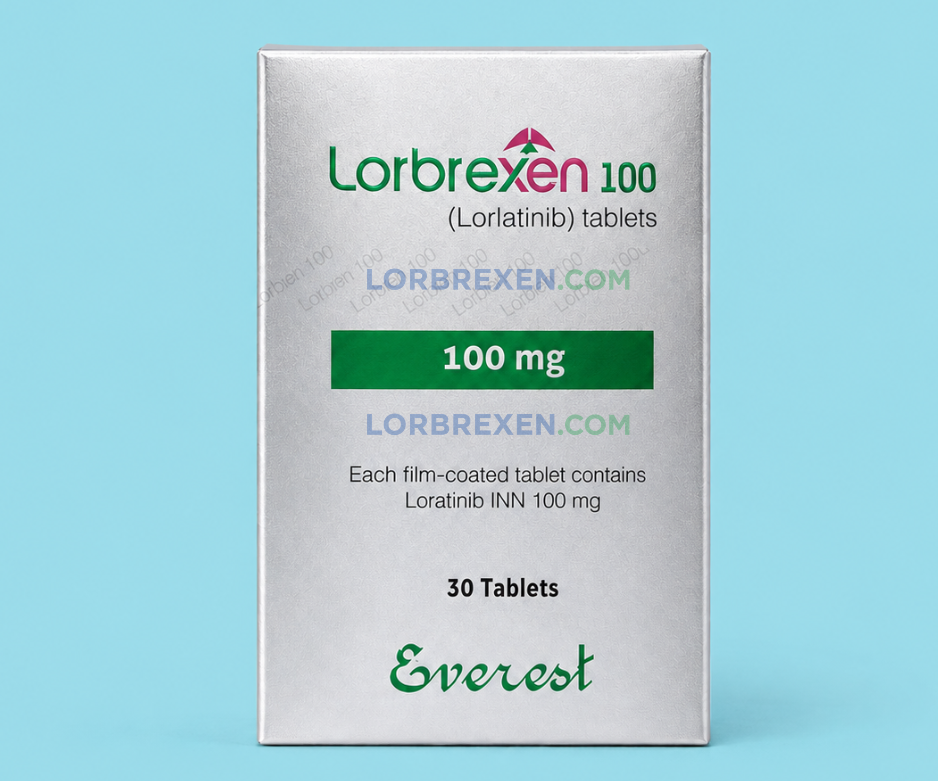
Lorbrexen 100 mg (Lorlatinib)
Disclaimer: Before purchasing any medicine, always verify whether there is a valid drug license.
Lorbrexen 100 mg is identified on this website as a product containing 100 mg of lorlatinib, an orally administered, third-generation anaplastic lymphoma kinase (ALK) tyrosine kinase inhibitor used in the treatment of selected patients with advanced or metastatic ALK-positive non-small cell lung cancer (NSCLC).
The specific manufacturer, marketing authorization holder, manufacturing site, formulation, packaging, country of authorization and regulatory status of the Lorbrexen-branded product should be verified against the actual product packaging and applicable regulatory documentation.
Lorlatinib is the active substance in the established reference product LORBRENA in the United States and Lorviqua in the European Union. Pfizer states that lorlatinib was discovered by Pfizer scientists and developed specifically to address resistance mechanisms affecting earlier ALK tyrosine kinase inhibitors.
The FDA’s current LORBRENA labeling identifies lorlatinib tablets in 25 mg and 100 mg strengths, with a recommended dose of 100 mg orally once daily for the labeled U.S. indication. The FDA identifies the initial U.S. approval as 2018.
The EMA-authorized European product Lorviqua contains lorlatinib and is supplied as film-coated tablets. The EMA identifies Pfizer Europe MA EEIG as the marketing authorization holder for Lorviqua.
Everest Pharmaceuticals Ltd. About the Manufacturer
Everest Pharmaceuticals Ltd. is a pharmaceutical manufacturer based in Bangladesh. The company is involved in the development, production, and marketing of pharmaceutical products, including medicines used in specialized therapeutic areas.
Everest Pharmaceuticals focuses on manufacturing quality medicines for the healthcare market and offers a range of products, including treatments used in oncology and other medical fields. Its product portfolio includes various generic medicines formulated for patients and healthcare providers.
Company Name: Everest Pharmaceuticals Ltd.
Industry: Pharmaceutical Manufacturing
Country: Bangladesh
Business Activities: Manufacturing, marketing, and distribution of pharmaceutical products
Product Areas: Includes specialized and general pharmaceutical medicines
Quality Focus: Product manufacturing and quality-control processes are intended to support medicine quality, safety, and regulatory compliance.
For product-specific information, it is important to check the official packaging, product insert, batch details, and manufacturer information, as formulations and regulatory status may vary by product and market.
Head Office: Everest Pharmaceuticals Ltd. is located at Rahman’s Regnum Centre (10th & 11th floor), 191/1 Tejgaon Commercial Area, Dhaka-1208, Bangladesh.
Manufacturing Plant: Everest Pharmaceuticals Limited B-33, 45 & 46, BSCIC, Kanchpur, Narayanganj–1430, Bangladesh.
| Topic | Information |
|---|---|
| Product name | Lorbrexen |
| Active ingredient | Lorlatinib |
| Stated strength | 100 mg |
| Dosage form | Oral tablet. |
| Route | Oral, if confirmed for the specific product |
| Drug class | ALK tyrosine kinase inhibitor |
| Therapeutic category | Antineoplastic medicine |
| Reference/originator product | LORBRENA / Lorviqua |
| Original developer | Pfizer |
| U.S. reference product | LORBRENA |
| European reference product | Lorviqua |
| LORBRENA initial U.S. approval | 2018 |
| Lorviqua EU authorization | 6 May 2019 |
| Lorbrexen manufacturer | Everest Pharmaceuticals Ltd. |
| Lorbrexen marketing authorization holder | Everest Pharmaceuticals Ltd. |
What Is Lorlatinib?
Lorlatinib is an oral, third-generation ALK tyrosine kinase inhibitor. It was developed to inhibit ALK signaling and to address resistance mechanisms that can arise during treatment with earlier ALK inhibitors.
ALK is a receptor tyrosine kinase involved in cellular signaling. In ALK-positive NSCLC, an abnormal ALK alteration can drive cancer-cell growth and survival.
Lorlatinib blocks ALK activity, thereby interfering with signaling that contributes to the growth and spread of ALK-positive cancer cells. The EMA describes lorlatinib as a tyrosine kinase inhibitor that blocks ALK activity and reduces the growth and spread of cancer cells.
An important characteristic of lorlatinib is its activity against several ALK resistance mutations and its ability to reach the central nervous system. This is particularly relevant because ALK-positive NSCLC can spread to the brain and resistance to earlier ALK inhibitors can develop.
What Is Lorbrexen 100 mg?
Lorbrexen 100 mg is identified for this website as a lorlatinib 100 mg product.
The stated strength means that the dosage unit contains an amount of lorlatinib equivalent to 100 mg, subject to confirmation from the product’s official labeling and packaging.
The 100 mg strength corresponds to an established lorlatinib tablet strength. The FDA lists LORBRENA tablets in 25 mg and 100 mg strengths, while the EMA describes Lorviqua as an oral film-coated tablet with a recommended dose of 100 mg once daily.
However, the existence of a 100 mg reference-product strength does not by itself establish the formulation, manufacturer, regulatory authorization or pharmaceutical equivalence of a specific Lorbrexen product.
What Is Lorlatinib Used For?
Lorlatinib is used for selected patients with ALK-positive advanced or metastatic non-small cell lung cancer.
In the United States, LORBRENA is indicated for adults with metastatic NSCLC whose tumors are ALK-positive as detected by an FDA-approved test.
In the European Union, the EMA describes Lorviqua as monotherapy for adults with ALK-positive advanced NSCLC who:
- have not previously been treated with an ALK inhibitor; or
- have disease that has progressed after alectinib or ceritinib as the first ALK TKI; or
- have disease that has progressed after crizotinib and at least one other ALK TKI.
Regulatory indications can differ between countries and may change as authorities update product information. The indication for a specific Lorbrexen product should therefore be confirmed against the applicable local authorization.
Why Is ALK Testing Important?
Lorlatinib is not intended for all patients with NSCLC.
Its use depends on identifying an appropriate ALK-positive tumor. ALK-positive NSCLC contains a molecular alteration involving the ALK gene that can contribute to uncontrolled cancer-cell signaling.
An appropriate validated diagnostic test is therefore important before treatment.
The FDA specifies that the tumor must be ALK-positive as detected by an FDA-approved test, while the EMA likewise states that the cancer should be tested before starting Lorviqua.
How Does Lorlatinib Work?
Lorlatinib works by inhibiting the activity of ALK, a receptor tyrosine kinase.
ALK signaling
Abnormal ALK signaling can stimulate pathways involved in:
- Cancer-cell proliferation
- Cell survival
- Tumor progression
- Metastatic spread
By inhibiting ALK, lorlatinib interferes with these signals.
Activity against resistance
One of the development objectives for lorlatinib was to address resistance to earlier ALK inhibitors. Pfizer describes lorlatinib as being developed specifically to overcome resistance to first- and second-generation ALK-targeted therapies.
Central nervous system activity
Lorlatinib was also developed with central nervous system penetration in mind. This characteristic is clinically important because advanced ALK-positive NSCLC can involve the brain.
The EMA notes that Lorviqua has demonstrated activity in patients whose cancer has spread to the brain.
Lorbrexen 100 mg and LORBRENA
LORBRENA is the established U.S. reference brand containing lorlatinib.
The FDA’s current prescribing information identifies LORBRENA as lorlatinib tablets and records its initial U.S. approval in 2018.
Lorbrexen should not automatically be described as LORBRENA or as identical to LORBRENA solely because both products contain lorlatinib.
Important product-specific characteristics may differ, including:
- Manufacturer
- Marketing authorization holder
- Manufacturing site
- Excipients
- Packaging
- Regulatory authorization
- Country of registration
- Distribution arrangements
- Batch-release arrangements
The specific relationship between Lorbrexen and LORBRENA requires product-specific documentation.
Lorviqua and the European Reference Product
In the European Union, lorlatinib is marketed under the brand name Lorviqua.
The EMA lists:
- Active substance: Lorlatinib
- Product: Lorviqua
- Therapeutic area: Non-small-cell lung cancer
- Pharmaceutical form: Film-coated tablet
- Route: Oral
- Marketing authorization holder: Pfizer Europe MA EEIG
- EU marketing authorization: 6 May 2019
The EMA’s current product information was updated in July 2026, demonstrating that regulatory product information can continue to change after initial authorization.
Originator and First Developer of Lorlatinib
The originator/developer history of lorlatinib should be distinguished from the manufacturer of a particular later product.
Pfizer states that LORBRENA was discovered by Pfizer scientists and that lorlatinib was developed specifically to inhibit tumor mutations associated with resistance to other ALK tyrosine kinase inhibitors.
Pfizer also described lorlatinib as a third-generation ALK inhibitor during its regulatory development program.
Accordingly:
| Role | Company/product |
|---|---|
| Original developer of lorlatinib | Pfizer |
| U.S. reference brand | LORBRENA |
| European brand | Lorviqua |
| EU marketing authorization holder for Lorviqua | Pfizer Europe MA EEIG |
| Specific Lorbrexen manufacturer | Everest Pharmaceuticals Ltd. |
The term originator should not be used to imply that Pfizer manufactures the specific Lorbrexen product unless product-specific documentation confirms that relationship.
Lorlatinib 100 mg Dosage
The FDA-approved LORBRENA dosage for the labeled U.S. indication is:
100 mg orally once daily.
The FDA also identifies a reduced dosage of 75 mg once daily for patients with severe renal impairment.
For Lorbrexen specifically, the applicable dosage must be based on the product’s verified labeling and the treating healthcare professional’s prescription.
Important
The 100 mg strength should not be interpreted as an instruction for every patient to take 100 mg daily.
Dose selection can depend on:
- Disease indication
- Kidney function
- Drug interactions
- Adverse reactions
- Other medicines
- Patient-specific clinical circumstances
- Applicable regulatory labeling
Patients should not change their lorlatinib dose without professional medical guidance.
How to Take Lorlatinib
Lorlatinib is administered orally.
The established reference products use once-daily administration. The FDA recommends LORBRENA 100 mg orally once daily, while the EMA likewise identifies 100 mg once daily as the recommended Lorviqua dose.
General administration principles include:
- Take lorlatinib exactly as prescribed.
- Take the medicine at approximately the same time each day when possible.
- Do not increase or decrease the dose independently.
- Do not stop treatment without discussing it with the treating healthcare professional.
- Follow the specific instructions supplied with the product.
- Check the applicable local prescribing information for product-specific instructions.
Missed Dose
Missed-dose instructions should be taken from the official product information applicable to the medicine being used.
Patients should not double the next dose unless specifically instructed by their healthcare professional.
If a dose is missed or vomiting occurs after taking a dose, the patient should consult the prescribing information or contact the treating healthcare professional or pharmacist for product-specific instructions.
Lorlatinib Side Effects
Lorlatinib has a distinctive adverse-effect profile.
The EMA identifies commonly occurring adverse effects including:
- High blood cholesterol
- High triglycerides
- Edema
- Peripheral neuropathy
- Weight gain
- Problems with thinking, learning and memory
- Fatigue
- Joint pain
- Diarrhea
- Mood-related effects
The severity and frequency of adverse reactions can vary between patients and treatment settings.
Important Safety Considerations
Central Nervous System Effects
Lorlatinib can cause effects involving thinking, learning, memory, mood and other neurological or psychiatric functions.
Patients and caregivers should report significant or new changes in:
- Memory
- Concentration
- Thinking
- Speech
- Mood
- Behavior
- Coordination
- Mental status
The EMA identifies cognitive effects and mood effects among recognized adverse reactions.
Hyperlipidemia
Increased cholesterol and triglyceride concentrations are important known effects of lorlatinib.
Blood lipid levels may require monitoring during treatment, and lipid-lowering therapy may be necessary in some patients according to clinical judgment.
The EMA identifies hypercholesterolaemia and hypertriglyceridaemia among the most common adverse effects.
Edema
Fluid retention or edema can occur.
Patients should report significant swelling, rapid weight changes or other concerning symptoms to their healthcare professional.
Peripheral Neuropathy
Lorlatinib may cause peripheral neuropathy, which can present as:
- Numbness
- Tingling
- Burning sensations
- Weakness
- Altered sensation in the hands or feet
Persistent or worsening symptoms should be discussed with the treating healthcare professional.
Weight Gain
Weight gain has been reported with lorlatinib.
Unusual or substantial changes in body weight should be discussed during routine monitoring.
Pulmonary Toxicity
Pneumonitis or interstitial lung disease can be serious.
Symptoms such as:
- New or worsening cough
- Shortness of breath
- Difficulty breathing
- Unexplained respiratory symptoms
require prompt medical assessment.
The EMA identifies pneumonitis among the serious adverse effects associated with Lorviqua.
Heart Rhythm and Conduction Effects
Lorlatinib can affect cardiac electrical conduction in some patients.
The FDA labeling includes precautions concerning cardiac effects, and medication review is important because other medicines may also influence cardiac conduction.
Patients should inform their healthcare professional about existing heart conditions and all medicines being taken.
Liver-Related Safety and Drug Interactions
Lorlatinib has clinically important interactions with certain medicines.
In particular, strong CYP3A inducers are an important concern. The EMA states that Lorviqua must not be used together with strong CYP3A4/5 inducers because the combination may cause liver damage and reduce lorlatinib concentrations.
Patients should provide a complete list of:
- Prescription medicines
- Over-the-counter medicines
- Vitamins
- Herbal products
- Supplements
before starting treatment.
Contraindications and Important Restrictions
The current U.S. FDA label identifies concomitant use with strong CYP3A inducers as a contraindication for LORBRENA.
This should not be generalized to every Lorbrexen product without reviewing its applicable official product information.
Patients should have their complete medication list reviewed by a qualified healthcare professional before treatment.
Pregnancy and Reproductive Considerations
Lorlatinib may cause fetal harm.
Pregnancy and reproductive considerations should therefore be discussed with an appropriate healthcare professional before treatment.
Patients who are pregnant, planning pregnancy or who could become pregnant should consult their treating team regarding the applicable precautions in the official product information.
Breastfeeding
Breastfeeding recommendations should follow the current official prescribing information for the specific lorlatinib product and jurisdiction.
Patients receiving lorlatinib should discuss breastfeeding with their healthcare professional before initiating or continuing treatment.
Monitoring During Lorlatinib Treatment
Depending on the patient’s clinical circumstances, monitoring may include:
- ALK-positive disease status
- Neurologic and cognitive symptoms
- Mood and behavioral changes
- Lipid levels
- Blood pressure
- Cardiac status where clinically appropriate
- Kidney function
- Liver function where appropriate
- Respiratory symptoms
- Drug interactions
- Treatment response
- Adverse reactions
The monitoring plan should be individualized by the treating oncology team.
Lorlatinib Clinical Pharmacology
Lorlatinib is a small-molecule kinase inhibitor designed to inhibit ALK signaling.
Its pharmacologic development focused on overcoming clinically relevant ALK resistance mutations and maintaining activity within the central nervous system.
Key pharmacologic characteristics
| Characteristic | Information |
|---|---|
| Active substance | Lorlatinib |
| Drug class | ALK tyrosine kinase inhibitor |
| Generation | Third-generation ALK inhibitor |
| Primary molecular target | ALK |
| Route | Oral |
| Established reference dose | 100 mg once daily |
| U.S. tablet strengths | 25 mg and 100 mg |
| Major therapeutic area | ALK-positive NSCLC |
The FDA confirms the 25 mg and 100 mg tablet strengths for LORBRENA, while the EMA identifies Lorviqua as an oral film-coated tablet with a recommended 100 mg once-daily regimen.
Lorlatinib and Brain Metastases
Central nervous system disease is an important consideration in ALK-positive NSCLC.
Lorlatinib was specifically developed with central nervous system activity in mind. The EMA notes that Lorviqua is effective in patients whose cancer has spread to the brain.
This characteristic distinguishes lorlatinib from some earlier targeted therapies and contributes to its role in ALK-positive NSCLC treatment.
Clinical Evidence
Lorlatinib’s development included studies in patients with ALK-positive advanced or metastatic NSCLC, including patients previously treated with other ALK tyrosine kinase inhibitors.
The regulatory evidence supports its use in appropriately selected ALK-positive NSCLC populations.
Clinical trial outcomes should not be interpreted as a guarantee of an individual patient’s response. Treatment response can depend on:
- ALK molecular characteristics
- Previous ALK inhibitor treatment
- Resistance mutations
- Disease burden
- Brain involvement
- General health
- Other medicines
- Individual tumor biology
Treatment decisions should therefore be made by the patient’s oncology team.
Everest Pharmaceuticals Ltd. Product Verification Process
To verify the authenticity of an Everest Pharmaceuticals product, follow the verification process below:
Scan the QR Code: Scan the QR code printed on the product box.
The QR code will direct you to the official product verification page.
Open the Box: After accessing the verification page, open the product box and locate the verification code printed on the bottle.
Submit the Verification Code: Enter the verification code from the bottle on the verification page and submit it to check the product’s authenticity.
Verification Success: If the verification is successful, the product is confirmed as legitimate.
Verification Error: If the system displays a verification error, the product may be counterfeit or unauthorized. Do not use the product until its authenticity has been confirmed through an appropriate official channel.
Counterfeit Products: If a product is confirmed to be fake, do not use or distribute it. Report the suspected counterfeit product and supplier to the appropriate regulatory authorities, such as the Directorate General of Drug Administration (DGDA) in World, and take appropriate legal action against the supplier through the relevant authorities.
Important: Always purchase medicines from licensed pharmacies or authorized suppliers and verify suspicious products before use.
Manufacturer, Originator and Supply-Chain Roles
These pharmaceutical terms describe different responsibilities.
Originator/developer
The company responsible for discovering and developing the active substance or reference medicine.
For lorlatinib, Pfizer states that the medicine was discovered by Pfizer scientists and developed by Pfizer.
Reference product
The established medicinal product used as the reference in a particular regulatory context.
For lorlatinib, major reference brands include:
- LORBRENA in the United States
- Lorviqua in the European Union
Manufacturer
The company or facility responsible for manufacturing the particular medicinal product.
Marketing authorization holder
The legal entity responsible for the medicinal-product authorization in a specific jurisdiction.
For EU Lorviqua, the EMA identifies Pfizer Europe MA EEIG as the marketing authorization holder.
Distributor
A company involved in the commercial distribution of a medicinal product.
The distributor of Lorbrexen is [Information requires verification].
These roles should not be treated as interchangeable.
Lorbrexen vs LORBRENA vs Lorviqua
| Characteristic | Lorbrexen | LORBRENA | Lorviqua |
|---|---|---|---|
| Active ingredient | Lorlatinib | Lorlatinib | Lorlatinib |
| Stated strength on this website | 100 mg | 25 mg and 100 mg tablets | 100 mg recommended dose; product-specific strengths should be checked |
| U.S. reference brand | No | Yes | No |
| EU brand | No | No | Yes |
| EU marketing authorization holder | – | N/A | Pfizer Europe MA EEIG |
| Specific manufacturer | – | See official product documentation | See official product documentation |
| Regulatory status | – | FDA-approved | EU-authorized |
| Should products be called identical? | No, not without documentation | Reference product | Reference product in EU |
The same active ingredient does not automatically mean that two branded products are identical in every pharmaceutical or regulatory respect.
Storage and Handling
Storage instructions for Lorbrexen specifically should be taken from the actual package and official product information.
Do not publish product-specific storage conditions without documentation.
Patients should:
- Keep the medicine in its original packaging when appropriate.
- Follow the labeled storage conditions.
- Keep medicines away from children.
- Avoid using tablets from damaged or questionable packaging.
- Check the expiry date before use.
- Ask a pharmacist how to dispose of unused medicine.
Important Safety Notice
Lorlatinib is a prescription anticancer medicine that requires professional supervision.
Important safety concerns can include:
- Central nervous system and cognitive effects
- Mood or behavioral changes
- Hypercholesterolemia
- Hypertriglyceridemia
- Edema
- Peripheral neuropathy
- Weight gain
- Pneumonitis
- Drug interactions
- Cardiac effects
- Other clinically significant adverse reactions
The EMA specifically identifies cognitive effects, hyperlipidemia, edema, peripheral neuropathy, weight gain, fatigue, arthralgia, diarrhea, mood effects and pneumonitis among important adverse reactions.
Patients should promptly report significant or unexpected symptoms to their healthcare professional.
Medical Information Disclaimer
The information on this website is provided for general educational and informational purposes.
It does not:
- Diagnose cancer.
- Determine whether lorlatinib is appropriate for an individual.
- Replace a physician, oncologist or pharmacist.
- Replace official prescribing information.
- Establish a patient-specific dosage.
- Confirm the authenticity of a specific Lorbrexen package.
- Confirm the regulatory status of a specific Lorbrexen product.
Do not start, stop, increase or decrease lorlatinib based solely on information published on this website.
Treatment decisions should be made with an appropriately qualified healthcare professional using the prescribing information applicable to the patient’s country.
Frequently Asked Questions
What is Lorbrexen 100 mg?
Lorbrexen 100 mg is identified on this website as a product containing 100 mg of lorlatinib, an ALK tyrosine kinase inhibitor used for selected patients with ALK-positive advanced or metastatic NSCLC.
The manufacturer and regulatory status of the specific Lorbrexen product require verification.
What is lorlatinib?
Lorlatinib is an oral third-generation ALK tyrosine kinase inhibitor developed by Pfizer for ALK-positive NSCLC. Pfizer states that it was developed to address resistance to earlier ALK-targeted therapies.
What is lorlatinib used for?
Lorlatinib is used for appropriately selected patients with ALK-positive advanced or metastatic NSCLC. Approved treatment populations vary by jurisdiction.
What is the usual lorlatinib dose?
The FDA-approved LORBRENA dosage is 100 mg orally once daily for the labeled U.S. indication. A lower dose may be appropriate in certain circumstances, such as severe renal impairment.
What strengths does LORBRENA have?
The FDA identifies LORBRENA tablets in 25 mg and 100 mg strengths.
Is Lorbrexen the same as LORBRENA?
They should not automatically be described as identical. Both may contain lorlatinib, but the manufacturer, formulation, excipients, authorization, packaging and regulatory status of Lorbrexen must be independently verified.
What is Lorviqua?
Lorviqua is the European Union brand containing lorlatinib. The EMA identifies Pfizer Europe MA EEIG as its marketing authorization holder.
Who developed lorlatinib?
Pfizer developed lorlatinib. Pfizer’s own published information states that LORBRENA was discovered by Pfizer scientists.
Does lorlatinib work against brain metastases?
Lorlatinib was developed with central nervous system activity in mind, and the EMA notes its effectiveness in patients whose ALK-positive NSCLC has spread to the brain.
What are common lorlatinib side effects?
Important reported adverse effects include high cholesterol, high triglycerides, edema, peripheral neuropathy, weight gain, cognitive effects, fatigue, joint pain, diarrhea and mood effects.
Can lorlatinib affect the brain or mood?
Yes. Cognitive, mood and other central nervous system effects can occur. Patients should report significant changes in thinking, memory, behavior or mood.
Can lorlatinib cause high cholesterol?
Yes. Hypercholesterolemia and hypertriglyceridemia are recognized adverse effects of lorlatinib.
Can lorlatinib cause lung problems?
Pneumonitis is a recognized serious adverse effect. New or worsening respiratory symptoms require prompt medical assessment.
Can lorlatinib interact with other medicines?
Yes. Drug interactions are clinically important. Strong CYP3A inducers are specifically contraindicated with LORBRENA in the U.S. label and are identified by the EMA as a restriction for Lorviqua.
Is lorlatinib chemotherapy?
Lorlatinib is generally classified as a targeted anticancer therapy and ALK tyrosine kinase inhibitor rather than conventional cytotoxic chemotherapy.
Is Lorbrexen approved?
The regulatory status of the specific Lorbrexen-branded product is [Information requires verification]. The existence of FDA approval for LORBRENA or EU authorization for Lorviqua does not establish authorization for a separate Lorbrexen product.
Who manufactures Lorbrexen?
The specific Lorbrexen manufacturer is currently [Information requires verification].
It should not be assumed to be Pfizer merely because Pfizer developed lorlatinib and markets LORBRENA/Lorviqua.
How can Lorbrexen be verified?
Check the product packaging, manufacturer information, batch number, expiry date, regulatory details and official product documentation. Where authenticity is uncertain, consult a pharmacist, authorized supplier or relevant medicines regulator.
Editorial and Product Verification Notice
The distinction between lorlatinib information and Lorbrexen-specific information is important.
The established pharmacology, reference products and regulatory information for lorlatinib can be supported by authoritative sources. However, claims concerning the particular Lorbrexen product should only be made when supported by product-specific evidence.
Accordingly, this page deliberately identifies the following as requiring verification:
- Lorbrexen manufacturer
- Lorbrexen marketing authorization holder
- Manufacturing site
- Country-specific registration
- Packaging configuration
- Excipients
- Product-specific regulatory status
- Authentication system
- Commercial distributor
This approach avoids incorrectly presenting the originator’s information as proof of the identity or authorization of a separate branded product.
References
U.S. Food and Drug Administration — LORBRENA
The FDA prescribing information identifies LORBRENA as lorlatinib tablets, gives the approved U.S. indication, 100 mg once-daily recommended dosage, 25 mg and 100 mg tablet strengths, severe-renal-impairment dosing and contraindication information.
European Medicines Agency — Lorviqua
The EMA provides information on Lorviqua, including its active substance, indication, 100 mg once-daily recommended dose, adverse effects, EU authorization and marketing authorization holder.
Pfizer — Lorlatinib Development
Pfizer states that LORBRENA was discovered by Pfizer scientists and describes its development as targeting resistance to earlier ALK tyrosine kinase inhibitors.
Lenvaxen.com Source Framework
The supplied Lenvaxen website content establishes the editorial approach of distinguishing verified product-specific information from general reference-product information and using explicit verification notices where manufacturer or regulatory evidence is unavailable.
Final Medical Information Notice
Lorbrexen 100 mg is presented on this website as a lorlatinib-containing product. The specific manufacturer, authorization status, manufacturing site and commercial identity of Lorbrexen must be verified against authoritative product documentation.
LORBRENA and Lorviqua are established lorlatinib reference/authorized products associated with Pfizer, but their regulatory status and product information should not automatically be attributed to Lorbrexen.
This content is for general educational purposes and does not replace professional medical advice or the latest official prescribing information.
Rahim Hossain
Lorbrexen 100 mg was explained clearly, especially the information about lorlatinib and ALK-positive lung cancer. The FAQ section made the key points easy to understand.
Sarah Mitchell
I found the information about lorlatinib’s mechanism, possible side effects, and treatment considerations very helpful. The content is straightforward and easy to follow.
Daniel Carter
The Lorbrexen information was useful and well organized. I especially appreciated the sections covering ALK testing, drug interactions, and the CROWN clinical study.
Latest News
Hello world!
August 18, 2026 | by Lorbrexen
Welcome to WordPress. This is your first post. Edit or delete it, then start writing!
Read More →
FAQs
Lorlatinib is a targeted anticancer medicine classified as a third-generation ALK tyrosine kinase inhibitor. It is designed to block abnormal ALK signaling in certain ALK-positive cancers.
ALK status helps determine whether a tumor contains the alteration targeted by lorlatinib. In the United States, the labeled indication requires confirmation of an ALK-positive tumor using an FDA-approved test.
Lorbrexen is identified on this website as a product containing lorlatinib 100 mg. Lorlatinib is the active pharmaceutical ingredient and generic drug name.
Yes. Current U.S. labeling covers adults with metastatic non-small cell lung cancer whose tumors are ALK-positive as identified using an FDA-approved test.
Lorlatinib was developed as a next-generation ALK inhibitor with activity against several ALK mutations associated with resistance to earlier ALK inhibitors.
Lorlatinib was specifically developed to penetrate the blood-brain barrier. Clinical studies have demonstrated intracranial activity in ALK-positive NSCLC, making central nervous system disease an important part of its clinical profile.
Yes. Weight gain and edema, or swelling caused by fluid retention, are among the adverse reactions reported with lorlatinib. Significant or persistent changes should be discussed with a healthcare professional.
Monitoring may include cholesterol and triglyceride levels, blood pressure, blood glucose, neurological or mental-status changes, and other assessments based on the patient’s medical condition and prescribing information.
Yes. Hypertension and hyperglycemia are recognized risks associated with lorlatinib. Patients may require appropriate monitoring and management during treatment.
Before starting Lorbrexen, the healthcare professional should review the tumor’s ALK status, other medicines being taken, medical history, potential drug interactions and relevant safety considerations. The product-specific manufacturer and regulatory authorization of Lorbrexen should also be verified.