
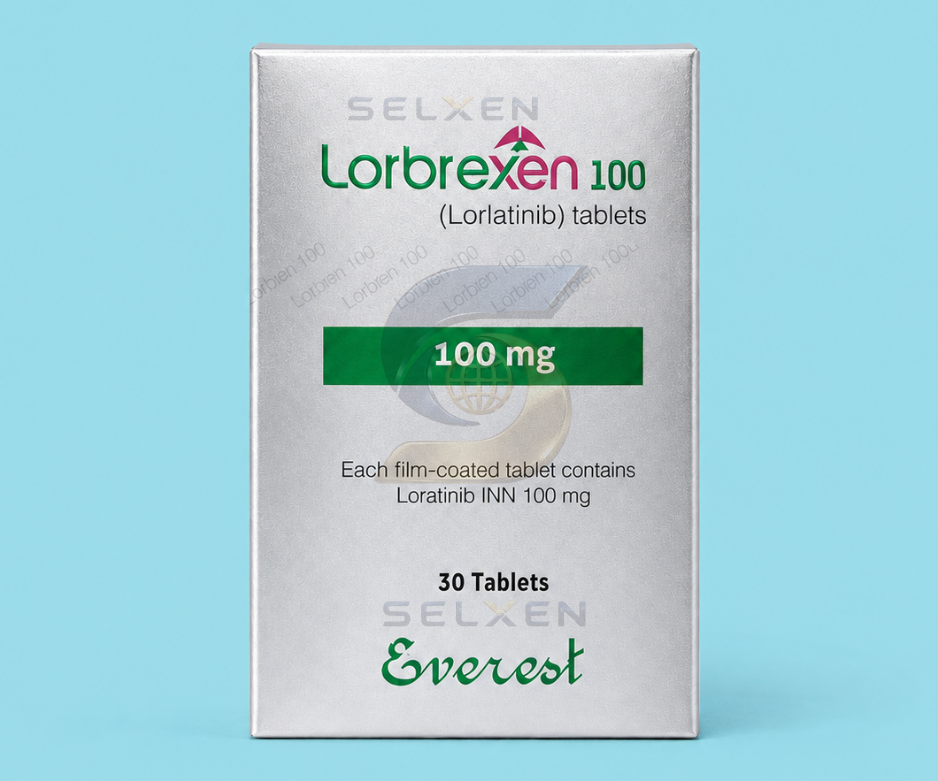
Lorbrexen® 100 mg is a third-generation targeted oncology therapy containing the active ingredient Lorlatinib, an orally available, ATP-competitive anaplastic lymphoma kinase (ALK) and ROS1 receptor tyrosine kinase inhibitor (TKI). Manufactured by Everest Pharmaceuticals Ltd. in Bangladesh under strict regulatory oversight, Lorbrexen serves as the high-potency generic equivalent of Pfizer’s innovator brands Lorbrena® (US/Japan) and Lorviqua® (Europe). Specifically synthesized as a compact macrocyclic molecule, Lorbrexen is engineered to penetrate the blood-brain barrier and conquer secondary gatekeeper resistance mutations, including the challenging ALK G1202R mutation in patients battling advanced or metastatic ALK-positive non-small cell lung cancer (NSCLC).
Lorbrexen 100 mg provides an affordable, life-extending therapeutic option for patients requiring either frontline therapy or treatment after disease progression on first- and second-generation ALK TKIs (such as Crizotinib, Alectinib, or Ceritinib).
What Is Lorbrexen 100 mg (Lorlatinib)?
Lorbrexen 100 mg is a precision-targeted antineoplastic medication developed for adult patients diagnosed with locally advanced or metastatic non-small cell lung cancer (NSCLC) exhibiting an abnormal anaplastic lymphoma kinase (ALK) gene rearrangement.

In healthy tissue, the ALK receptor is largely dormant in adulthood. However, in approximately 5% of NSCLC cases, genetic translocations (most commonly fusing the EML4 gene with the ALK gene) create an aberrant, constitutively active ALK fusion protein. This hyperactive kinase sends uncontrolled downstream survival and proliferative signals to cancer cells. Lorbrexen binds directly to the adenosine triphosphate (ATP) binding site of this chimeric enzyme, turning off tumor cell growth, halting metastatic proliferation, and inducing apoptotic cancer cell death.

Generic Equivalence: Lorbrexen vs. Innovator Lorbrena® / Lorviqua®
Patients and oncology teams frequently evaluate the bioequivalence of generic oncology formulations against originator drugs. Chemically, Lorbrexen 100 mg is identical to Lorbrena® 100 mg. Both contain the exact molecular moiety lorlatinib (molecular weight: 406.41 g/mol; formula: C₂₁H₁₉FN₆O₂).
Everest Pharmaceuticals synthesizes Lorbrexen, adhering to Current Good Manufacturing Practices (cGMP) validated by the DGDA. Because it contains identical active pharmaceutical ingredients in equivalent strengths, dissolution profiles, and bioavailability curves, Lorbrexen elicits the exact same clinical pharmacodynamics and therapeutic outcomes as the innovator, but at a fraction of the originator’s global market price.
Active Pharmaceutical Ingredient (API) & Formulation Details
Each core tablet delivers 100 mg of pure micronized lorlatinib. The formulation is surrounded by an enteric and moisture-protective film coat that prevents rapid degradation from ambient humidity while ensuring consistent gastric disintegration. Importantly for cardiovascular health, the non-active excipient core contains less than 1 mmol of sodium (23 mg) per unit, categorizing Lorbrexen as essentially “sodium-free.”
Lorbrexen 100 mg Price Analysis & Global Affordability
Access to third-generation ALK inhibitors is frequently limited by the high pricing of innovator medications. In many healthcare markets, brand-name Lorbrena® costs between Contact: https://lorbrexen.com/contact/ for a standard 30-day supply (30 tablets of 100 mg), putting it beyond the reach of uninsured, underinsured, or international self-paying patients.
Generic Lorbrexen manufactured by Everest Pharmaceuticals provides a more accessible alternative without compromising therapeutic quality.
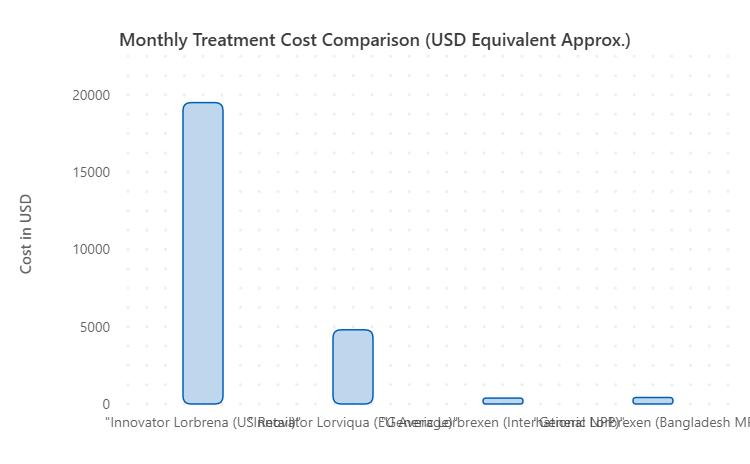
Bangladesh Retail Price (Official DGDA MRP)
Inside Bangladesh, oncology medicine prices are monitored by the Directorate General of Drug Administration (DGDA).
Medically Approved Indications in ALK-Positive NSCLC
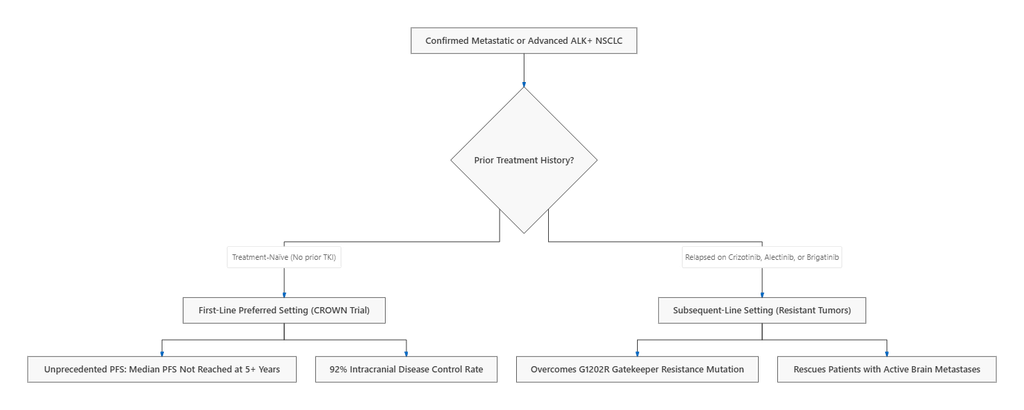
First-Line Frontline Therapy: Insights from the Landmark CROWN Trial
Historically, lorlatinib was restricted to late-line salvage therapy. However, the international Phase 3 CROWN trial (published in the New England Journal of Medicine with long-term updates in the Journal of Clinical Oncology) transformed modern clinical practice:
- PFS Superiority: When tested head-to-head against first-generation crizotinib in treatment-naive ALK-positive metastatic NSCLC, lorlatinib demonstrated an unprecedented reduction in the risk of disease progression or death by 81% (Hazard Ratio [HR] = 0.19).
- Long-Term Durability: Long-term 5-year follow-up data presented at ASCO revealed that 60% of patients receiving frontline lorlatinib remained alive and progression-free, compared to just 8% on crizotinib. The median progression-free survival (mPFS) for lorlatinib has yet to be reached.
- Intracranial Protection: Lorlatinib slashed the time to intracranial progression by 92% (HR = 0.08). In patients without baseline brain metastases, lorlatinib prevented intracranial seeding almost completely.
Clinical Takeaway: Both NCCN and ESMO clinical oncology guidelines now classify lorlatinib as a Category 1, preferred first-line therapeutic option.
Second-Line & Resistant Disease: Overcoming the G1202R Mutation
For patients who initially received second-generation TKIs (such as alectinib, ceritinib, or brigatinib), therapeutic resistance typically develops within 12 to 36 months.
In up to 30% of these progressed cases, resistance is driven by the emergence of the notorious ALK G1202R solvent-front mutation. The bulky arginine substitution in this mutation sterically blocks older, linear-shaped kinase inhibitors from docking into the ATP-binding cavity.
Lorbrexen’s distinctive, small macrocyclic ring structure was custom-designed to slip neatly into the ATP-binding pocket despite the presence of the bulky G1202R mutation. Consequently, it achieves objective response rates (ORR) exceeding 35%–40% in patients whose disease has progressed past all earlier targeted therapies.
Mechanism of Action: Overcoming the Blood-Brain Barrier
Up to 40% of patients with ALK-positive lung cancer develop brain metastases during their disease course, and up to 70% experience CNS spread after developing resistance to older ALK inhibitors.
The blood-brain barrier (BBB) is reinforced by active efflux transporters, specifically P-glycoprotein (P-gp/ABCB1) and Breast Cancer Resistance Protein (BCRP/ABCG2), which act as molecular pumps, actively ejecting chemotherapeutic agents and early-generation TKIs back into the systemic circulation.
Lorlatinib was developed with specific physicochemical attributes:
- Low Molecular Weight & Low P-gp Substrate Affinity: Unlike first- and second-generation TKIs, lorlatinib is a very weak substrate for P-gp efflux. It passes through capillary endothelial cells of the brain and remains within cerebral tissue.
- High Intracranial Drug Concentration: In clinical pharmacology studies, the free concentration of lorlatinib in human cerebrospinal fluid (CSF) matches 60%–75% of unbound plasma concentrations.
- Clinical CNS Efficacy: In patients with active, measurable brain metastases, Lorbrexen produces an intracranial objective response rate (IC-ORR) of 82%, with complete disappearance of brain lesions observed in many patients.
Dosage, Administration, & Practical Titration Protocols
Standard Adult Daily Dosing Schedule
- Prescribed Daily Dose: 100 mg orally once daily.
- Administration Timing: Lorbrexen should be taken at approximately the same time each day, 24 hours apart.
- Food Compatibility: May be taken with or without meals. Food does not clinically alter total plasma absorption (AUC) or maximum serum concentrations (Cmax).
- Swallowing Instructions: Tablets must be swallowed whole with a glass of water. Do not chew, crush, break, or dissolve the tablets, as altering physical integrity can lead to unpredictable absorption and altered bioavailability.
Stepwise Dose Reduction Levels (100 mg → 75 mg → 50 mg)
Adverse event management often requires short-term dose interruptions followed by stepwise dose reductions. Healthcare providers employ the following formal dose titration hierarchy:
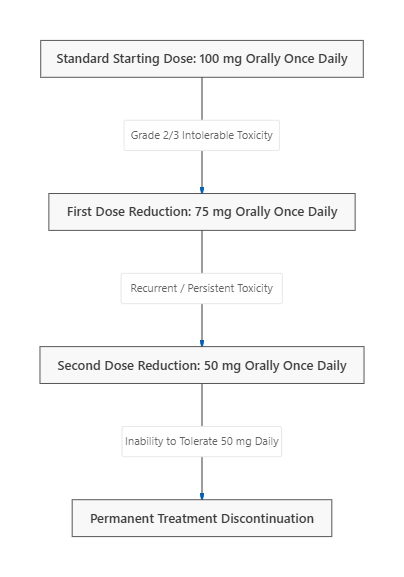
- First Dose Reduction: 75 mg once daily (utilizing either three 25 mg tablets or appropriate prescribed titration formulations).
- Second Dose Reduction: 50 mg once daily (utilizing two 25 mg tablets or half-strength clinical adjustments).
- Discontinuation Criteria: If a patient cannot tolerate 50 mg once daily after resolving toxicities, Lorbrexen therapy must be permanently discontinued.
Managing Missed or Vomited Doses
- Missed Dose Rule: If a dose is missed, the patient should take it as soon as they remember, unless the next scheduled dose is less than 4 hours away. If fewer than 4 hours remain before the next scheduled dose, skip the missed tablet completely and take the next dose at the regular time.
- Never Double-Dose: Patients must never consume two tablets simultaneously to compensate for a missed dose.
- Vomited Dose Protocol: If vomiting occurs shortly after taking a tablet, do not take an extra dose. Continue therapy with the next planned daily dose the following day.
Managing Adverse Reactions & Essential Safety Monitoring
While Lorbrexen is generally well tolerated compared to traditional cytotoxic chemotherapy, it exhibits a distinct, unique adverse reaction profile driven by its metabolic and central nervous system activity.
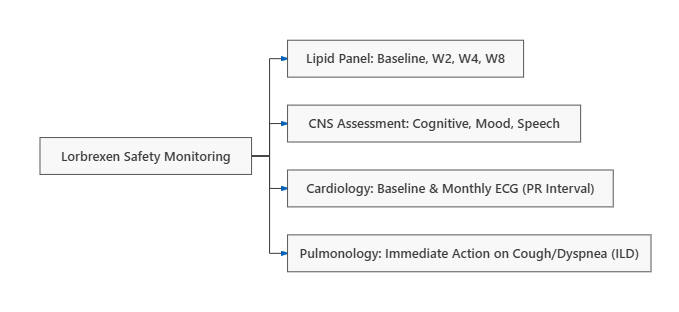
Adverse Reaction Profile & Management Table
| Adverse Reaction | Observed Clinical Incidence | Primary Symptoms | Clinical Management & Intervention Protocols |
|---|---|---|---|
| Hypercholesterolemia | >80% to 84% (Severe in ~15%) | Typically asymptomatic; diagnosed via laboratory lipid testing. | Obtain fasting lipid panels at baseline, week 2, week 4, and week 8; then every 2–3 months. Initiate statin therapy (preferred: Rosuvastatin 5–10 mg, atorvastatin, or pravastatin). If Grade 4 (>500 mg/dL), withhold Loribiglitazone until recovery to Grade ≤2, then resume at the same dose or reduce to 75 mg. |
| Hypertriglyceridemia | >60% to 67% (Severe in ~15%) | Asymptomatic; severe elevation increases risk of acute pancreatitis. | Monitor alongside cholesterol. When triglycerides exceed 500 mg/dL (5.7 mmol/L), initiate fenofibrate or omega-3 fatty acids. If >1,000 mg/dL, withhold Lorbrexen immediately to prevent clinical pancreatitis. |
| Central Nervous System (CNS) Effects | 20% to 29% (Cognitive, mood, speech) | Memory deficits, word-finding difficulty, slowed processing, vivid dreams, anxiety, depression, mood swings. | Educate caregivers to observe subtle behavioral shifts. For Grade 1 (mild): Continue treatment or consider temporary hold. For Grade 2–3: Withhold until symptoms return to Grade ≤1; resume at a reduced dose (75 mg or 50 mg). Permanent discontinuation required for severe psychiatric emergencies. |
| Peripheral Edema | 50% to 55% | Swelling in feet, ankles, lower legs, or hands. | Compression stockings, leg elevation, dietary sodium limitation. If persistent, low-dose loop diuretics (furosemide) or dose reduction may be considered. |
| Peripheral Neuropathy | 40% to 48% | Numbness, tingling sensations, or burning discomfort in extremities. | Dose reduction (75 mg) if symptoms impair activities of daily living; neuro-supportive therapies (gabapentin/pregabalin). |
| Cardiac PR Prolongation / AV Block | 1% to 2% | Bradycardia, dizziness, lightheadedness, syncope. | Obtain baseline ECG and repeat monthly. Avoid co-administering other PR-prolonging drugs. Withhold Lorbrexen for second-degree or symptomatic AV block; re-evaluate pacemaker requirements if therapy must continue. |
| Interstitial Lung Disease (ILD) / Pneumonitis | 1.5% to 3% | New or worsening dry cough, shortness of breath, fever, hypoxia. | Medical Emergency. Immediately withhold Lorbrexen upon suspicion. Perform high-resolution chest CT. If drug-induced ILD/pneumonitis is confirmed, permanently discontinue Lorbrexen and initiate high-dose systemic corticosteroid therapy. |
| Weight Gain | 25% to 30% | Increased appetite, gradual fluid retention, metabolic shift. | Nutritional counseling, caloric management, exercise programs where clinically feasible. |
Central Nervous System (CNS) & Neurocognitive Effects: Caregiver Advice
Unlike older TKIs, Lorbrexen’s exceptional ability to penetrate the blood-brain barrier means it directly interacts with receptors across the central nervous system. Between 20% and 30% of patients experience neurocognitive or mood-related changes.
Caregiver Checklist:
- Cognitive Symptoms: Watch for sudden forgetfulness, disorientation, difficulty performing arithmetic, or searching for simple words during conversations.
- Mood Changes: Be attentive to unexpected irritability, uncharacteristic crying spells, sudden anxiety, or severe depressive feelings.
- Sleep & Perception: Monitor for vivid, disturbing dreams or hallucinations.
- Action Plan: If changes occur, contact the treating oncologist immediately. Patients should avoid driving or operating dangerous equipment until neurocognitive status stabilizes following dose reductions.
Drug Interactions, Food Compatibility, & Precautions
Lorlatinib undergoes extensive hepatic clearance primarily governed by the CYP3A4 enzyme system and UGT1A4, with secondary clearance through CYP2C8, CYP2C19, and P-gp. Crucially, lorlatinib is both a substrate and a moderate inducer of CYP3A.
Severe Contraindication: Strong CYP3A4 Inducers
The concurrent use of Lorbrexen with strong CYP3A inducers is strictly contraindicated.
Concomitant administration with drugs such as rifampin, carbamazepine, phenytoin, enzalutamide, mitotane, or the herbal supplement St. John’s wort (Hypericum perforatum) causes an 85% decline in lorlatinib systemic exposure, rendering the cancer treatment ineffective. Concurrently, this combination can trigger severe, potentially irreversible hepatic necrosis characterized by transaminase (ALT/AST) elevations exceeding 20 times the upper limit of normal.
Interactions with CYP3A4 Inhibitors & Food Considerations
- Strong CYP3A Inhibitors: Medications such as itraconazole, ketoconazole, posaconazole, voriconazole, clarithromycin, and ritonavir substantially inhibit lorlatinib breakdown, increasing serum concentrations and elevating toxicity risks. If co-administration is unavoidable, reduce the Lorbrexen daily dose from 100 mg to 75 mg.
- Grapefruit & Starfruit: Patients must strictly avoid grapefruit, grapefruit juice, and Seville oranges. These fruits contain furanocoumarins that irreversibly inhibit intestinal CYP3A4, inadvertently creating toxic drug concentrations in the bloodstream.
Critical Contraception Protocols for Male & Female Patients
Because lorlatinib induces CYP3A, it actively accelerates the metabolic breakdown of estrogenic and progestational steroids, rendering oral contraceptive pills, patches, and implants ineffective.
- Female Patients: Women of childbearing potential must utilize an effective non-hormonal method of contraception (such as copper IUDs or barrier methods) during therapy and continue for at least 35 days following the final dose.
- Male Patients: Lorlatinib causes embryotoxic and teratogenic damage to sperm cells. Men with female partners of reproductive potential must use effective barrier contraception (condoms) during active treatment and continue for 14 weeks after the last dose. Men with pregnant partners must use condoms throughout intercourse.
- Fertility Considerations: Lorbrexen may impair male reproductive potential. Male patients should seek consultation regarding sperm cryopreservation before starting therapy.
- Breastfeeding: Lactation must be suspended during treatment and for 7 days following the last dose, as drug secretion into human breast milk and infant risk cannot be excluded.
Storage, Packaging, & Authentication
- Temperature Regulation: Store below 30°C (86°F). Protect from excessive heat and direct solar radiation.
- Moisture Protection: Store tablets inside the original blister foil or moisture-sealed pack until immediate ingestion. Do not transfer tablets into unsealed pill sorters in humid environments.
- Anti-Counterfeit Authentication: Every genuine pack of Lorbrexen 100 mg from Everest Pharmaceuticals includes an intact manufacturer security seal, an embossed batch code, a manufacturing date, and an expiration date. Avoid blister packages with broken seals or non-matching serial designations.